Dornoch dialogues: a supervisor’s perspective on a PhD studentship in history

On a bright summer day in 2013, a prospective research student from Canada stepped off a bus in a north Highland town, guitar in hand. The next three years impacted, not just on his life, but on those of the historians who would supervise him.

cormack-5

Like most academics at my stage, I’ve supervised a few PhDs. It’s a serious responsibility as the experience is often life-transforming for the student. I now see that the ‘Royal Dornoch PhD Studentship’ at the University of the Highlands and Islands has had a profound effect on my own work too.

There was some ‘prehistory’ to this. Since 2008, I had begun a conscious move towards the coast in my historical research. It was only from 2011, however, that a new possibility emerged. I became Head of the university’s Centre for History that year and was perhaps keen to make my mark in that position. Serendipitously, Neil Hampton, manager of Royal Dornoch Golf Club, and several of his colleagues, visited our Centre to let us know that the club would be celebrating ‘400 Years of Golf in Dornoch’ in 2016. Would we like to be involved? If so, what could we offer?

I jumped at the chance. With assistance from Centre colleagues, things advanced quickly. We created a proposal. Further chats and emails, and the extremely generous support of the club and the university’s Development Office, put the financial support in place. By the spring of 2013, an advert had gone out, interviews were complete, a contract signed and the guitar-playing Canadian, Wade Cormack, was preparing to wing his way over from Toronto Pearson to Inverness Dalcross.

The golf club hosted a hugely successful launch. Leading professional golfer, Paul Lawrie, was kind enough to attend, the events filmed for BBC News and broadcast on Reporting Scotland that evening. The university’s Communications and Marketing team worked hard and supportively with us too, while there were features also in the national newspapers and additional media attention back in Wade’s home country. It was a fine start.

Once Wade commenced the research proper on 1 September, the club were keen to keep his profile high. They encouraged him to meet as many of the donors as possible, to write a regular blog and to deliver annual lectures and other talks to members.
cormack-3

Each of the three academic years to follow was action-packed, but if I were to single out one, it would be 2015-16, during which Wade:

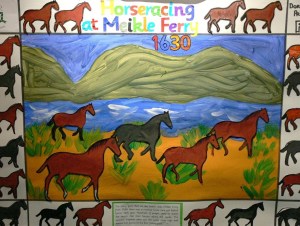
  • collaborated with staff and pupils at both Dornoch Academy and Dornoch Primary School to create a project on the history of golf fashions as well as a wonderful series (and subsequent exhibition) of artistic renderings of the town’s sporting past;
  • travelled to North Carolina and New York to speak, respectively, at the prestigious Pinehurst and St. Andrews Golf Clubs;
  • presented at the Captain’s invitational event in Dornoch;
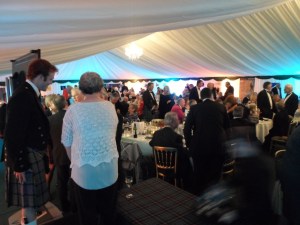
  • was the main speaker at a gala dinner on Dornoch links, attended by several hundred, and which attracted members of ‘Royal’ golf clubs from across the world.
cormack-2

Wade’s alma mater, at Guelph, remained interested, and, as if 2015-16 wasn’t busy enough already, he delivered the second of two lectures at the ‘Scottish Roundtable Lecture Series’ hosted by the Centre for Scottish Studies there. He also spoke to the Rotary Club of Inverness, presented a paper at the annual British Society of Sports History  conference in Swansea, and sneaked in another talk at the Centre for History’s annual postgraduate research day in Dornoch.

It all seemed a long way from the more solitary joys and challenges of archival research and writing I had experienced as a PhD student. As his supervisors, we sometimes worried about the pressures on Wade. Doctoral students are human beings. In retrospect though, in Wade’s case, we perhaps needn’t have fretted so much. All the activity proved, as planned, to be complementary and, dare I say it, even enjoyable. Through regular meetings, the setting and re-setting of timetables, detailed and, I trust, prompt enough commentary on his work, the presentation of monitoring forms to the university’s Research Degree Committee and of annual reports for the two funding bodies, we were able to keep a close eye on how things were going.

The intellectual traffic between a PhD supervisory team and their student is sometimes seen as one-way. It seems strangely uncommon for supervisors to comment on how the experience informed their own work. Wade’s findings influenced my writing of two new Coastal History articles, encouraged me to lead on the development of a taught postgraduate module, ‘Sport in Highland History’, and helped the Centre cement its place in Dornoch via the ‘Firths and Fjords’ conference in spring 2016, thereby providing some background to the distance-learning MLitt Coastal and Maritime Societies and Cultures, which we will launch in 2017.

Wade had his oral examination in October 2016. He has since submitted, and had accepted, his final hardbound thesis. As early as 2015, he had published an article in Sport History. But his external examiners have expressed their keenness for him to convert the thesis to book form. I agree wholeheartedly.

Thirty-eight months after the PhD commenced, I’m hugely impressed with everything Wade’s achieved. He was already a self-motivated researcher and a strong communicator the day he stepped off that 25X bus. But he did develop an additional skill set: a much greater ‘tightness’ in his writing, and an impressive thoroughness, rigour and clarity when it came to researching and presenting on early modern Scottish sport history. Out of all this he produced an excellent PhD thesis. Not only that, but he rose to the myriad challenges and opportunities of finding himself in a totally new working and living environment. For all of this, he, his parents, friends, the club, the Centre for History and the university have cause to be proud.

Pictish Diet: A Biohistorian’s Perspective

This latest guest blog is by Dr Shirley Curtis-Summers who is a bio-archaeologist at the University of Liverpool. I first heard her deliver a lecture on her research at a packed and very positively-received public event in Portmahomack in 2014. Dr Curtis-Summers also presented at the ‘Firths and Fjords’ conference. Regarding that, one attendee highlighted the ‘excellent presentation by Shirley Curtis-Summers – didn’t think isotopic research would be my thing’ while others considered hers in the top three or four of the lectures they had heard at the event [David].

Day One of the ‘Firths and Fjords’ conference and I find myself seated within the splendour of Dornoch Cathedral. The Keynote lecture, presented by Professor John Gillis, inspired me to think about ‘ecotones’, more specifically, the transitions between land and sea and between freshwater and saltwater ecosystems. Professor Gillis also stressed the importance of interdisciplinary research to understand coastal histories or indeed a ‘New Coastal History’, a term introduced by Professor Isaac Land who reminded us that “…many people are already doing coastal history without knowing it”. This made me think about my research, which is multidisciplinary, using archaeology, bioarchaeology and historical approaches to reconstruct past lifeways in medieval Britain and, more pertinent to this post, the lives of those from Portmahomack.

I imagined I would be an outsider at the ‘Firths and Fjords’ conference; a bioarchaeologist amidst a sea of historians. I thought of myself as somebody who did not actually ‘do’ coastal history much, yet the words of Professor’s Gillis and Land made me think otherwise. Hearing the many wonderful papers at this conference reaffirmed my opinion that coastal communities such as those from medieval Portmahomack were not liminal, remote or insular; they were outward-looking, innovative, creative and artistic. The wealth of archaeological finds from Portmahomack, which was eloquently presented by Professor Martin Carver at the conference, clearly demonstrates this.

Day Two and, with my ‘coastal’ hat on, I presented some results from my recent PhD research on the Portmahomack human skeletal collection. My research focused on reconstructing lifeways of Pictish lay and monastic communities and of the later medieval parish church community, using human osteology and stable carbon and nitrogen isotope techniques. The aim of my talk was to inspire dialogue on whether we can identify a link between the diet of the Pictish communities and the iconography on the Pictish cross-slabs, especially ‘watery’ symbols. I have been pondering this line of enquiry since my Masters research back in 2009 when my pilot study on the Portmahomack collection revealed interesting dietary results.[1] The isotope results from my research on Portmahomack diet suggest no fish was consumed by the Pictish monks and layfolk, yet large amounts were consumed in the mid-later medieval phases; a dietary pattern that is seen across Scotland during this time.[2] Very little has been done to combine evidence from bioarchaeology and the material culture to answer questions about Pictish lifeways and their interconnectivity between land and sea. New research is however emerging, which will combat this lacuna, such as that by Dr Kate Britton at the University of Aberdeen. However, can bioarchaeological evidence help elucidate the meaning of certain symbols on Pictish stones? There are various interpretations of the placement of Pictish stones and their symbols, which include links to rivers [3]; agricultural land [4], status or monastic boundary markers [5], and currently the most popular theory of some form of script or writing system.[6]

craw-stane

Fig.1. The Craw Stane, Rhynie (www.flickr.com)

The salmon and the Pictish beast symbols appear together on numerous Pictish stones including St Viegan’s, Golspie, Ulbster, Meigle, and the Craw Stane (Fig.1). Based on the isotope evidence, these symbols do not appear to represent a dietary link, although others may do, for example scenes of deer and wild boar being hunted on the St Viegan’s and Shandwick stones. The Pictish beast is still commonly described as a dolphin, an animal which has often been linked to Pagan representations of fertility, birth, reincarnation and the life force. However, some experts oppose the dolphin theory and are more inclined to refer to it as a composite marine figure (Isabel Henderson, pers.comm.).[7] Interestingly, Alistair Mack [8] noted that the Pictish beast (or elephant as he refers to it) is “as standard in pattern as the Burghead bulls” and that it must represent something very specific, but what? Did symbols such as the salmon represent superstitions that rendered the consumption of such watery animals taboo and do tales such as The Salmon of Knowledge in The Boyhood Deeds of Finn mac Cumhaill derive from these earlier Pagan beliefs? The short answer is we may never know (I know, infuriating), but by providing a multidisciplinary approach to these questions, we can gain greater insights into the interconnectivity between coastal communities, their landscapes and waterscapes. The coastal dwellers at Portmahomack (Fig.2) would have had some knowledge of fishing yet they chose to live off the land and were by no means dependent on the seas or rivers for sustenance. They did however consider aquatic animals and beasts important enough to depict on their stones and, in time, with the growth of the new Christian religion, fish were no longer taboo but became the chosen food, partly to reflect religious adherence on fast days. My talk at the conference received shared interest and agreement on the continued need for a multidisciplinary approach, but it also highlighted the shared frustration of the unknown, which is often the case where the enigmatic Picts are concerned; that’s what makes it all the sweeter a topic to discuss.

port-beach
Fig.2. Portmahomack beach looking over to Dornoch (photo: author’s own)

The conference ended with Professor Martin Carver as our intrepid guide on a group excursion to the Tarbat Discovery Centre and the Pictish stones at Shandwick and Hilton of Cadboll. I’m sure many of you have been to these sites but if not, I hope this beautiful poem will inspire you. It was written by Jenny Pestridge [9] who visited the Tarbat Discovery Centre on April 20th 2016:

PORTMAHOMACK
Peace hangs like a netted shroud,
Anchored from mountain top to monastery,
Woven by centuries of ancient bones,
Which once through faith,
Fired this holy space with the Glory of God.
Peace weights the clouds,
Covering the layered anguish of souls,
Whose cries are caught by the fishers of men,
In nets which once burst with joy and praise.
God, in the breaths between history, is still found,
Not entwined nor buried,
But alive in the living stones,
Whose prayers are heard eternally in the wind,
In this holy place.

Those who engage in multidisciplinary research often have many hats and titles and may now too realise that they ‘do’ coastal history. I have gladly added the role of ‘coastal biohistorian’ to my multidisciplinary sphere; hence I shall dwell within the liminal space and look to land and sea, bones and stones, words and wisdom. Rarely has a conference left me so invigorated and inspired; the people, the place (and the whisky) all contributed to a wonderful experience. It was very informative, fruitful and engaging, and the community involvement was a joy to behold. Many thanks to Dr David Worthington, the UHI’s ‘Firths and Fjords’ team, and the people of Dornoch. Here’s to the next one!


[1] S. Curtis-Summers, J. Montgomery and M.O.H. Carver, ‘Stable Isotope Evidence for Dietary Contrast between Pictish and Medieval Populations at Portmahomack, Scotland.’ Medieval Archaeology, 58, (2014), pp. 21-43.

[2] e.g. M. Jay and M.P. Richards, ‘British Iron Age Diet: Stable Isotopes and Other Evidence.’ Proceedings of the Prehistoric Society, 73, (2007), pp.169-190.

[3] C.A. Gordon, ‘The Pictish Animals Observed’, Proceedings of the Societies of Antiquaries of Scotland, 98, (1966), pp. 215-224.

[4] E. Alcock, ‘Pictish Stones Class I: Where and Why?’ Glasgow Archaeological Journal, 15, (1989), pp.1-21.

[5] M.O.H. Carver, ‘An Iona of the East: The Early-Medieval Monastery at Portmahomack, Tarbat Ness,’ Medieval Archaeology, 48, (2004), pp.1-30.

[6] K. Forsyth, ‘Some Thoughts on Pictish Symbols as a Formal Writing System’, in I. Henderson and D. Henry, (eds.), The Worm, the Germ and the Thorn: Pictish and Related Studies Presented to Isabel Henderson, (Balgavies, 1996), ch. 9, pp. 85-98.

[7] Grateful thanks to Isabel Henderson for her advice on Pictish symbols.

[8] A. Mack, Field Guide to the Pictish Symbol Stones, (Balgavies, 1997).

[9] Many thanks to Jenny Pestridge for permission to share her poem.


Discovering the Solway Firth

The Solway Firth is attracting increasing attention from scholars, these including one of our ‘Firths and Fjords’ conference speakers, Professor Ted Cowan, who referred to it in his excellent Dornoch paper from earlier this year as ‘Scotland’s forgotten frontier littoral’. Ann Lingard’s guest blog post is a different kind of contribution, which spans disciplinary boundaries in a convincing and refreshing manner. Ann’s area for study covers both sides of the estuary. It is an original approach, one which, in my opinion, allows her to identify, with verve, a history and a present that connects the adjacent coasts of England and Scotland in ways that are rarely studied. This is a piece of writing which conveys a great passion for the firth, its people, its currents, channels and margins – physical, social and cultural –  all of this highlighting Ann’s profound knowledge and sense of what can be both an appealing and troublesome place for those that spend their lives around or on it. (David)

The Solway Firth is special amongst firths and fjords in that it separates two nations, Scotland and England. The land borders were ‘debated’ for several centuries, but the marine border is a dotted line on a chart, invisible on the water.

The upper stretches of the sea and coasts are protected by a variety of conservation designations – European, English, Scottish. Although shell-fisheries and ‘heritage’ fisheries like stake-netting and haaf-netting have different rules and quotas each side of Solway, trawlers cross the ‘border’ as the weather and tides demand. Excellent cross-boundary organisations like the Solway Firth Partnership pull together the disparate threads of fisheries and conservation; lifeboat and coastguard teams from both countries work together.

The Solway – its sea and its margins – has such a strong character that it is nearly always referred to by its name, rarely as ‘the Firth’. It’s famous for its sunsets and the atmosphere of its wide shores, saltmarshes and ‘Mosses’; a presenter on BBC’s Autumnwatch from Caerlaverock Reserve called it ‘one of the last remaining unspoilt estuaries’ in the UK.

andrew's looking N to silloth

But this crooked finger of sea and estuary has been, and is, firmly in the sights of the energy-producers – West Cumbria calls itself Britain’s Energy CoastTM – with renewables such as E.On’s Robin Rigg offshore windfarm, and proposals for various schemes for barrages and ‘bridges’ and lagoons to harness tidal power; and plans for nuclear new-build at Moorside/Sellafield. Although the last of the undersea mines closed in 1986, West Cumbria Mining now has plans to mine undersea coking coal, and licences have been granted for Undersea Coal Gasification.

Some of these schemes, however worthy (depending on your personal viewpoint), have been advanced without regard for, or misplaced faith in, the Solway’s other special characteristic – its potential for huge Spring Tides, which can be as great as 10 metres between high and low water. For people who work on the Firth describe it, wryly, in unromantic language: ‘chaotic’, ‘unpredictable’, ‘it will kick you in the pants’; geologists and hydrographers use terms like ‘sediment-laden’, ‘changeable’, ‘shifting channels’ …

IMG_4348

During the years that I have been fascinated by the Solway, I’ve talked to people who themselves, or whose families, work along its margins and on the sea; I’ve met people who know about sandstone, peat, conservation, fisheries and bathymetry;  and wildfowlers, harbour-masters, stone-masons, artists and sculptors. I’ve been on foot and quad-bike to the far edge of intertidal mussel-beds to survey their size, and waded across the waters of the Firth on an old ‘wath’; I’ve stood up to my chest in the incoming tide, haaf-netting; flown over the coast at low tide in a gyroplane to understand the changing shapes of the shore and channels; travelled over the sea in a fisheries-protection vessel… And I’ve learnt the old names for boulders and rocky scars, and for peat-cutting tools and their uses.

Many of these journeys provide unexpected encounters and new lines of questioning, research and conversation and, throughout, everyone has been generous with their time and knowledge. Some whom I’ve met have lived here for generations, others are ‘off-comers’ – but amongst these coastal dwellers there is an intricate web of interactions and knowledge that crosses geographical and temporal boundaries. On both sides of the Solway, there is a shared respect for the changing and often unforgiving nature of the sea that links us.

As an illustration, here is a story, or interweaving of stories, which arose from serendipitous events and encounters.

The deep cove of Fleswick Bay on the Cumbrian coast is bounded by the high red sandstone cliffs of St Bees’ on which people have carved their names; some inscriptions date back to the 18th century and are blurred by algae and erosion, but the name ‘Judy McKay’ is engraved sharply and cleanly, in serif-bearing font. A few weeks after I’d mentioned this in an article a woman phoned me to tell me it was her name. On subsequent meetings she told me how her family had come from Scotland three generations previously; the men were quarriers and stone-masons. Her great-grandfather had sent red sandstone from their quarries near St Bees’ to America, in ships from Whitehaven, and his stone and his masons built the bridges of Cumbria’s Maryport-Carlisle railway. Her father used to carry his bike across the railway viaduct that once crossed the Solway from Bowness to Annan, to work at a quarry on the Scottish side – this Solway Junction Railway, branching off the Maryport-Carlisle, carried iron ore from West Cumbrian mines to Lanarkshire.

Underlying the red sandstone of the St Bees’ cliffs is the purplish Carboniferous sandstone, within which the coal seams, and the mines, stretch out miles beneath the Solway from Whitehaven. Some of the names carved on Fleswick’s cliffs are of miners from nearby Kells, who would bring their families to the beach during their annual holiday. The late Norman Hammond, who founded Solway Shark-watch, once told me that he would take miners out in his boat ‘to swim amongst the basking-sharks’ just off the shore – by way of thanks, one of those miners gave him a fossil freshwater mussel found in the mine. And now, as West Cumbria Mining drills exploratory cores under the sea, they use these ‘mussel-beds’ as markers for certain coal-seams; their lead geologist gave me, too, some fossil shells.

In such ways sciences and arts, histories and stories, and past and future industries, link together the coastal dwellers of the Solway Firth.

zapadnyy unloading molasses

Ann Lingard (Dr Ann Lackie) was formerly a scientist and academic at Cambridge and Glasgow Universities. She is a novelist, and writes non-fiction, www.annlingard.com . More detailed information about the topics covered above, and many others, are on the website www.solwayshorestories.co.uk, or the blog www.solwayshorewalker.wordpress.com. Ann tweets @solwaywalker.


Photos:

Flying over Moricambe (‘Hudson’) Bay, looking North to Silloth and Scotland (photo copyright Andrew Lysser)

The Bowness end of the Solway viaduct: looking across the Firth to Scotland

MV Zapadnyy unloading molasses for Carrs’ at Silloth

The Dichotomy of Insularity and the Case of Hailuoto

Having just returned from a few days spent around the Øresund, the strait that, only 2.5 miles wide at its narrowest, connects modern-day Denmark and Sweden, this guest blog by Outi Korhonen, a doctoral student at the University of Oulu in Finland, gives much needed depth and clarity to several themes on which I am no expert, but which are crucial to the history of the Baltic region.  Ice – in particular the duration, thickness and reliability of marine ice cover – is a key consideration when it comes to understanding of coastal communities in littoral and island communities throughout the Baltic, and especially to its north. For this reason, I’m delighted to be publishing this post by Outi, whose very well-received paper at the Firths and Fjords conference focused on the historical interaction between people and environment as regards the island community of Hailuoto in the Gulf of Bothnia. Her contribution below takes us to Hailuoto during the eighteenth and nineteenth centuries, and accounts for the influence of what was a challenging and dynamic marine, island and coastal environment, on human settlement and community development. (David)


The uniting and dividing nature of the sea has been a central topic in Maritime History, as well as in the emerging field of Coastal History, regarding which unifying features have been especially highlighted. Wide-reaching marine contacts seem to be one of  the most important characteristics defining coastal regions and communities.[1] The theme is of paramount importance to one such group, islanders, since their mobility is completely dependent on the ability to cross the sea, and so related discussions have been going on in Island Studies also. Generally, it has been agreed that islands are not wholly insular, in the broadest sense, with their historical experience being characterised, in fact, by a paradoxical contradiction between openness and isolation.[2]


A useful tool in dealing with the dualistic nature of islands is the ‘dichotomy of insularity’, a concept introduced by Louis Sicking, and which addresses the need to position islands and islanders somewhere along a spectrum between insularity and connectivity. By comparing several case studies of island history, Sicking has discovered some relevant topics concerning islands’ connectedness.[3] In terms of concrete case studies, an interesting example is the island of Hailuoto, which is located on the eastern coast of, and almost at the far end of, the Gulf of Bothnia, the most northern arm of the Baltic Sea. Both environmental conditions and political factors have limited the development of maritime contacts there.


In this northern climate, seasonal changes have had an exceptionally strong influence on the lives of islanders. As a brackish ‘inland’ sea, the salinity in the Baltic Sea is low, and, in this section, the sea freezes for months every winter. Weather, and icy conditions in particular, create a seasonal rhythm to life. During the summers and autumns, until November, the fishermen used to sail to their fishing camps on many smaller islands around the gulf. In the winter, Hailuoto residents used the ice cover as a highway to the mainland, mainly to the closest Ostrobothnian coast, while they could also cross the gulf to the Swedish side. The ice was relied upon to transport timber from the mainland by horse, an activity which would have been much more troublesome by boat. However, between the periods of open sea and of thick ice cover, there were dangerous phases of thin ice, which could last for months, and for islanders this meant total isolation. No news or post arrived on the island, dwellers could not always join the gatherings of the district court on the mainland, or get help when needed, as in the spring of 1847, when there was an epidemic of typhoid fever on the island and no doctors or medicine were available for nearly two months. Not a word of islanders’ distress was heard on the mainland until the ice broke and began to melt.


OLYMPUS DIGITAL CAMERA


A mercantilistic trade policy meant also political restrictions to mobility. Seafaring was limited by the so-called Bothnian staple constraint. The Swedish authorities forbade all the port towns on the Gulf of Bothnia from sending ships south of Stockholm or Turku or to receive foreign vessels. This restriction had existed since the Middle Ages, and in the early seventeenth century the policy was tightened still further, so that all sailing to the Gulf of Bothnia north of Gävle and Turku was forbidden for foreigners. For Stockholm, the Swedish capital, the policy aimed to reinforce its position as a commercial centre, and to retain the Gulf of Bothnia as its hinterland.[4] At that time, some of the Hailuoto peasants shipped their products – such as sealskins, blubber, butter and whitefish – to the capital, which dominated the trade completely. Yet there was discontent among Bothnian merchants regarding the staple constraint. Finally, in 1765, following many questions and complaints in the parliament (Riksdag), the Bothnian towns gained the right to sail directly to foreign ports albeit foreign vessels were not allowed to arrive at the ports of the Gulf until 1812. Step by step, the closest port towns to Hailuoto, Oulu and Raahe, began to export their main product, pine tar, beyond Stockholm, to the North Sea, Mediterranean and across oceans.[5] When marine trade picked up in the area, sea marks, charts and piloting were needed, and this provided additional employment for the inhabitants of Hailuoto. Ships passing by Hailuoto also used the bays of the island as anchorages.

hailuoto1-1


At the same time as trade was freed up, peasant shipping from Hailuoto to Stockholm came to an end. The reason mentioned in the sources was a lack of timber: it was not possible to build seaworthy vessels anymore. However, the islanders still took part in coastal trade by carrying freights close to the shores of the Gulf of Bothnia. The most important form of mobility remained travelling to the various fishing camps, until this too was hindered by a major political change: in the 1809 peace treaty between Sweden and Russia, the border between these two came as far as the gulf. The most important fisheries were left on the Swedish side, which was a crisis for the inhabitants of Hailuoto. Later they regained the fishing rights, but fishing probably never fully returned to its former extent.[6]


According to Sicking, further case studies of islands are needed to make comparative island history possible. I agree with this: while working on my dissertation on the environmental history of Hailuoto, I have been looking for case studies of island history to use for international comparison. In many respects Hailuoto is a unique and original island, and it is easier to demonstrate its distinctive features than what it holds in common with other islands. Still, I think this is one of the most important and intriguing tasks in my research:  to find out what connects Hailuoto with other, each in their own way unique, islands of the world.

[1] See, for example, Sarah Palmer, ʻThe Maritime World in Historical Perspective’, International Journal of Maritime History 23 (1) (2011), p.1; David Kirby, Merja-Liisa Hinkkanen, The Baltic and the North Seas (London: Routledge, 2000), pp. 1–3; Michael Pearson, ʻLittoral Society: The Concept and the Problems’, Journal of World History 17(4), (2006), pp. 353–354.

[2] Godfrey Baldacchino, ʻThe Coming of Age of Island Studies’, Tijdschrift voor Economische en Sociale Geografie, 95 (3), (2004), p. 274; Godfrey Baldacchino, ʻIslands – Objects of Representation’, Geografiska Annaler 87B(4), (2005), p. 248; Godfrey Baldacchino, ʻIsland Landscapes and European Culture: An  ʻIsland Studies’ Perspective’, Journal of Marine and Island Cultures, 2, (2013), p. 16; Gloria Pungetti, ʻIslands, Culture, Landscape and Seascape’, Journal of Marine and Island Cultures, 1, (2012), pp. 51–52.

[3] Louis Sicking, ʻThe Dichotomy of Insularity: Islands between Isolation and Connectivity in Medieval and Early Modern Europe, and Beyond’, International Journal of Maritime History 26(3), (2011), pp. 494–511.

[4] Ulla Ehrensvärd, ʻMare Balticum – Cultural Cross-Swells’, in Ulla Ehrensvärd, Pellervo Kokkonen, Juha Nurminen, eds., Mare Balticum. The Baltic – Two Thousand Years (Helsinki: John Nurminen Foundation, 1995), p. 132.

[5] Yrjö Kaukiainen, A History of Finnish Shipping (London: Routledge, 1993), pp. 33–35.

[6] Information about Hailuoto is based on archival material used in my forthcoming dissertation.

Insularities and Littoralities Connected: New Trends in Research from the Moray Firth to the Mediterranean

Dr Michael Talbot, the author of this guest post, is a Lecturer in History at the University of Greenwich. He has a wide interest in Ottoman history between the seventeenth and twentieth centuries. His research has focused on Ottoman-British relations in the eighteenth century, as well as on Ottoman ideas of maritime territoriality and maritime space in the same period in relation to threats of piracy and privateering. His most recent research examines Algerian merchants and commercial litigation in the eighteenth century as part of the ERC-funded Mediterranean Reconfigurations project coordinated at Université Paris 1. He is also a contributor to the Ottoman History Podcast, and its primary source blog, Tozsuz Evrak (Dust-Free Documents).

In the past few months, I have enjoyed two of the most stimulating academic gatherings that I have ever had the pleasure of attending, the first being the Firths and Fjords: A Coastal History Conference organised by David Worthington (University of the Highlands and Islands) and held at Dornoch in Scotland in April 2016, and the second being Insularities Connected: Bridging Seascapes from the Mediterranean to the Indian Ocean and Beyond organised by Antonis Hadjikyriacou (Centre for Mediterranean Studies, Foundation for Research and Technology – Hellas) and Sakis Gekas (York University, Canada) and held in Rethymno, Crete in June 2016. Not only did these gatherings provide wonderful papers and ideas, as well as challenging and thought-provoking methodological discussions, but represent, at least to me, an important moment in the study of both historical and contemporary seascapes and landscapes. I’d like to take this opportunity to reflect on some of the thoughts I have been left with from both of these exceptional conferences, and perhaps suggest some commonalities that should be developed.

Seinn an duan seo dhan Innis Àigh,

An innis uaine as gile tràigh.

Sing this song to the Happy Isle,

The green isle with the whitest shores.

IMG_3315 Dornoch, Scotland, 31 March 2016

For the past few years I have been thinking quite deeply about the relationship between the eighteenth-century Ottoman Empire and its Mediterranean waters, particularly in terms of asserting maritime power and territoriality. To begin with I was thinking from a purely territorial and legal perspective about different means of asserting territoriality that I shan’t bore you with here. Over the past year or so, the physicality of the relationships between state and subject, between centre and province, between imperial and local, have become increasingly apparent to me.  Above all, the role of coasts and islands in shaping and forming Ottoman ideas of dominion in the Mediterranean has lead me to rethink many of my earlier ideas about the conception of power, and has brought me to the conclusion that a huge discussion is needed about how we make sense of islands and coasts together. Insularity and littorality – the state of being an island and being a coast – are, I believe, greatly interlinked yet sufficiently different to require profound and in-depth discussion through comparative cases.

Let’s start with what I’ve learned about coasts and littorality. I’d like to mention two ideas that I encountered through the Dornoch conference that really got the mental cogs whirring. The first came from John Gillis’s keynote, addressed from the pulpit of the Dornoch Cathedral. In his wide-ranging and thought-provoking lecture, Professor Gillis described the importance of the ecotone, that is, a transitional area between two discrete biological environments. The coast therefore is the ecotone of the sea and the land, where the terrestrial and the maritime merge and clash, and create a separate yet entangled environment.  This makes the coast more than a frontier, a border, or a boundary, and more than a space of porousness, transience, and fluidity, but something somewhere in between. This links quite nicely with a blogpost published by Isaac Land on the Coastal History Blog that he was kind enough to direct me to in Scotland. There, he wrote of the somewhat insular, speaking of islands in a coastal context as ‘largely distinct and slightly inaccessible’. This fractional identity, as he calls it, allows us to think about coasts – and, indeed, islands – in a more nuanced way, with mostly, largely, partly, and slightly becoming useful adverbs to modify our descriptors and images of coast and/or island.

Ada sahillerinde bekliyorum

Her zaman yollarını gözlüyorum.

I’m waiting on the island shore,

I’m always watching out for you.


IMG_3582

Rethymno, Crete, 13 June 2016

If the conference at Dornoch was an attempt – and, in my humble opinion, a successful one – to open and develop a comparative discussion on things littoral, then that in Rethymno brought the question of insularity into sharp and critical focus. Islands can share the features of coasts in being bridges and frontiers, outward-looking and inward-looking, isolated and connected. Yet one of the most important aspects of this conference was the critique of the island’s exceptionalism. This is something to be considered for the coast as well. In one of his many beautiful papers (I don’t think he’s even capable of giving anything less) given at the University of Birmingham in early 2016, Antonis Hadjikyriacou described his conception of insularity as the state and perception of being an island, in particular as a means– in his specific context of Ottoman Cyprus and beyond – to move away from centre-province binaries and to think of islands as stepping stones in a wider spatial connectivity. ‘The spatiality of islands’, he contends, ‘is neither obvious nor self-explanatory’.

This statement is really quite exciting. By complicating our understanding of insular space, islands, Hadjikyriacou argues, become connectors between land and sea. The papers presented in Rethymno by scholars of the Mediterranean, the Caribbean, the Red Sea, and the Indian Ocean, provided their own evidence of connectivities, between historical spaces and times and between theoretical understandings of connectivity itself.  The verbal and spatial visualisations of these connectivities were sometimes quite breathtaking. We saw deep readings of documents of central and local archives and other textual sources joined by equally profound analyses of visual and material sources from a variety of disciplinary and interdisciplinary angles, something that this conference shared with the Dornoch gathering.

This is why I believe we are at such an important intellectual moment. Both conferences in a way came to similar conclusions, that the complication of insular and littoral space shows the importance of these spaces as connectors within their landscapes and seascapes. Coasts are not simply boundaries or contact zones between land and sea, and islands are not just disconnected features in a liquid desert. Now, we need to bring these conversations together, to talk about the methodological connections between island and coastal histories. We need to foster an intellectual ecotone, to reveal our connectivities, to critique and (re)define our analytical tools. The task ahead is absolutely huge, and will eventually need to bring in maritime scholars as well as those thinking about wider historical terrae firmae. But the empirical and conceptual potential of the collaboration between insular and littoral interconnections to produce a really new and genuine way to think about global and regional histories and links is clear, as has already been demonstrated in Dornoch and Rethymno. The only question is, in which littoral or insular paradise should we hold such a necessary and exciting gathering?

Is Coastal History Public History?

Johnathan Thayer, who writes the guest blog below, will be known to many as one of our speakers at the ‘Firths and Fjords’ conference. He is a Visiting Lecturer and the Coordinator of the Archives and Preservation of Cultural Materials Certificate Program at the Graduate School of Library and Information Studies, Queens College, The City University of New York (CUNY). Johnathan is also a doctoral student in History at The Graduate Center, CUNY, focusing on the legal, labour, and cultural history of merchant seamen in the United States, as well as the cultural geography of New York City’s sailortown. Thayer’s projects include “Mapping New York City’s Sailortown” at the New Media Lab, CUNY (more below), the Seamen’s Church Institute’s American Merchant Marine Veterans Oral History Project, and the Seamen’s Church Institute Digital Archives [David].

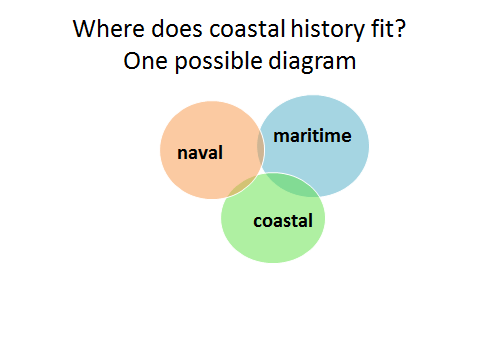
As we have seen from Isaac Land’s post in this blog, “Coastal History: Who, What, and Why?,” coastal history, as we are coming to understand it, is inherently interdisciplinary. In his diagrams Land places coastal history alongside and overlapping with other fields, including maritime, naval, environmental, urban, and leisure history. The question that I intend to pose in this post both accepts and further questions this model. Specifically, I ask: is there also something inherently public-facing about coastal history? In other words, is coastal history public history?

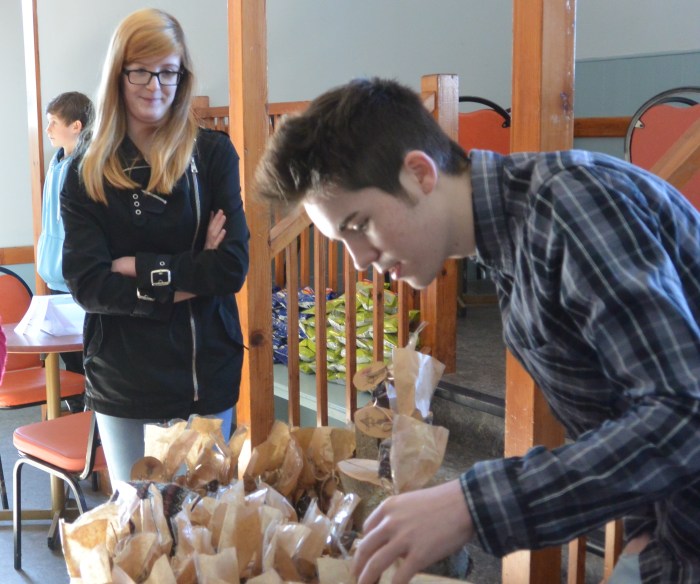
This question first occurred to me in Dornoch, at the wonderful “Firths and Fjords” conference hosted by UHI. Like many other conference participants, I was inspired by the seamless integration of local public stakeholders into the conference program. From the start of the conference to its finish, we were greeted by local youths selling chocolates to raise funds for their school, as well as a miniature army of volunteers prepping lunches and snacks, local historians and heritage workers with information booths and book stalls, and a mixed audience of members from local communities. Amid this group, the presence of academics that one might expect to find at such a conference sometimes felt like a formality, or a sideshow to more interesting things happening and being discussed outside the confines of papers and PowerPoint presentations.

As both a PhD student and faculty member at the City University of New York (CUNY), I took these experiences of successful public engagement back with me to Queens. CUNY has a mandate to serve the public of New York City through its twenty-four campuses located throughout the city.  All too often, however, I feel that institutions of higher education, even a university system with such a public mandate like CUNY, turn their backs on those who we are expected to serve in favor of the insular, safely familiar confines of academic scholarship and discourse. Thayer

Coastal history seems like a perfect thematic platform upon which we, as an international, interdisciplinary group, can build a sustainable, public-facing community of like-minded academics, heritage workers, and stakeholders.

There does indeed seem to be something deeply engaging about the coast for all human beings. Consider the allure of the coast, and the dependency of coastal peoples on its food supplies, that have made human societies statistically a people clinging to the margins of our geographic worlds?[1] And, there is no denying the urgencies placed upon coastal dwellers by rising tides and extreme weather, both in historical and current contexts.[2] Then, there is the coast as a commercialized space, both as epicenter of commerce (ports), and as a booming site of real estate development and space of leisure and consumerism curated by retail businesses, developers, and commercial architecture firms.[3] Finally, there is the epic arc of romanticism and mythology surrounding Jack Tar and the sea as seen and consumed from the coast, in the literature of Melville, Cooper, London, Conrad, et al, as well as visual art, music, poetry, film, and any other form of cultural expression imaginable.

This list of concepts does indeed seem to translate into a real market for public programming that engages our shared coastal histories. In New York City, for example, there are a number of initiatives that I see as representing an encouraging swell in interest among the public in the history of our identities as urban coastal dwellers. Public programming at the Brooklyn Navy Yard, including excursions hosted by Turnstile Tours, lend historical interpretation to a site that has transformed from maritime industries to new types of urban industrial development.[4] The Brooklyn Waterfront Research Center at New York City College of Technology has recently hosted a conference focused on the theme of “Past, Present & Future of Manufacturing along the Brooklyn Waterfront,”[5] and the Brooklyn Historical Society is currently planning an exhibition on the same topic. In the waterfront neighborhood of Red Hook, dedicated stewards of community history and culture work tirelessly against city regulations to preserve and maintain historic vessels like the Lehigh Valley no. 79 barge[6] and the oil tanker Mary Whalen. [7] In Manhattan, the South Street Seaport Museum works towards restoration of the historic Wavertree, as well as the debut in March of its first exhibition since Superstorm Sandy in 2012, titled “Street of Ships: The Port and Its People.”[8]

The project that I lead at the Seamen’s Church Institute of New York and New Jersey, “Mapping NYC’s Sailortown: A Networked Digital Archival Consortium” recently received a federal grant from the National Park Service that will provide funding to build a digital platform and conduct workshops with maritime heritage organizations in New York to create a public-facing digital archive for the city’s maritime history.

Considering all of this, and reflecting on my experiences in Dornoch, I would argue that there are indeed very real connections between coastal history and public history. Practitioners in both fields would benefit from recognizing these intersections, and collaboratively plotting a course forward.

[1] See, among others, John Gillis, The Human Shore: Seacoasts in History, (University of Chicago Press, 2012). Isaac Land suggests an expanded definition of “coastal squeeze,” a concept he attributes to coastal conservation scientist J. Pat Doody, to account for “recognizable human elements” within the “tug-of-war over values, resources, and turf” that occurs along coastlines. Isaac Land, “Coasts of the Anthropocene,” The Coastal History Blog, Port Towns and Urban Cultures, February 12, 2014, and J. Patrick Doody, “Coastal Squeeze—An Historical Perspective,” Journal of Coastal Conservation 10 (2004), 129-138.

[2] See, most recently, the “Keeping History Above Water: A Conference on Sea Level Rise and Historic Preservation,” held at Newport, RI in April 2016.

[3] James N. Lindgren, Preservation of South Street Seaport: The Dream and Reality of a New York Urban Renewal District, (New York University Press, 2014). Lindgren documents the history of contestations over the Seaport’s preservation and development, from the era of James Rouse’s waterfront “festival marketplaces” to more recent battles involving the Howard Hughes Corporation.

[4] http://turnstiletours.com/category/tour-pages/brooklyn-navy-yard-tours/

[5] http://brooklynwaterfront.org/

[6] The Lehigh Valley Barge no. 79 is the site of the Brooklyn Waterfront Museum: http://www.waterfrontmuseum.org/

[7] The Mary Whalen is the site of PortSide New York and the program WaterStories: http://portsidenewyork.org/

[8] http://www.ebroadsheet.com/Entries/2016/3/15_South_Street_Seaport_Museum_Debuts_First_Major_Post-Sandy_Exhibit,_Prepares_to_Welcome_Wavertree_Home.html


Reflections on the Tay Estuary Forum Annual Conference, 2016

This guest blog, by Lesley Harrison, is one of several which will appear here and focus on cross-disciplinary interpretations of the coast. It covers also community engagement and, I’m very happy to say, builds on some of the discussions at the recent ‘Firths and Fjords’ conference. Lesley is a PhD student at the University of Hull, whose research explores poetries of place along the North Sea coast. In interrogating terms like ‘seascape characterisation’, ‘coastal edge’ and ‘soft coasts’, Lesley’s post has much to offer all of us working on littoral places and their people. Her blog can be found here: auchmithiecalendar.wordpress.com [David]

Lesley HarrisonIt was a great pleasure to attend ‘Firths and Fjords’ in Dornoch. As a non-historian, I appreciated the chance to view the coastline from a historian’s multi-layered, multi-disciplinary perspective, and I have found myself referring back to the many interesting, detailed presentations since. This week I attended the Tay Estuary Forum Annual Conference (2016) at the University of Dundee. The Forum is a multi-disciplinary, multi-agency group. The topic of the conference was the ongoing quest to define and describe the coastline, an entity which by its shifting nature evades definition.

Dr Tim Stojanovic, Lecturer in Sustainable Development and Geography at the University of St Andrews, presented a paper on the use(s) of the term ‘seascape’ in planning and management. Tim identified what can be a lack of clarity of concept and vocabulary in coastal studies, a theme also highlighted by Professor Land at Dornoch.

Seascape Characterisation is a formal process conducted using a variety of methods and for a variety of purposes and on a range of scales, from the very local to entire local authority regions. The lack of consistency of approach, says Tim, has led to a lack of comparability of sites, as well as difficulties in integrating data about our coast. As the purposes and funders of seascape assessment have evolved over time, so have methodologies and vocabularies.

For example, in Scotland, since 1994, Landscape Character Assessments (LCAs) have included the requirement to describe Coastal Character Types and Areas. These have been done with increasing attempts at accuracy in description, with the result that among the 29 local authority studies there are now 77 different coastal ‘types’. Shetland’s 1994 LCA distinguished different kinds of views from adjacent coastlines, or ‘from land to land’; all other stretches were described as ‘coastal edge’. Skye and Lochalsh, on the other hand, included ‘fjords’, ‘narrows’ and ‘islands’ in their 1996 LCA. Approaches to seascape characterisation have also diverged considerably between Scotland and the rest of the UK. Local studies in the other nations may extend the boundaries of the ‘seascape’ well offshore, even up to around 12 nautical miles, to include relevant heritage/ecological resources.

Tim’s draft paper acknowledged a truth that also emerged in our panel discussions: that the boundary of sea and land provides us with a precious, intimate experience which is in part a kind of self-recognition. I remembered sitting in the evening sunshine in Dornoch Cathedral, listening to Professor Gillis describing our relationship with the shoreline as ‘topophilia’, and the consequences of becoming alienated from our ‘origin-place’. The paper refers to the Seascape Wheel (Natural England) as one practical method of recognising the many complex qualities that constitute a ‘seascape’, and the broad range of stakeholders that should be recognised in coastal development.

Also of particular interest perhaps to ‘Firths and Fjords’ people was the presentation by Jim Densham, Senior Land Use Policy Officer for RSPB Scotland. Jim lamented the no-mans’-land of our ‘soft coasts’, which are often overlooked by marine policies and land law, and explained the longer term consequences of removing natural tidal zones by creating hard sea defences.

His case study of a field in Nigg Bay was fascinating. An old sea wall protected the pasture, but the farmer was happy to sell the field as returns had never been very great. The RSPB purchased it in 2003, and breached the sea wall in two places, at the points where, according to old maps, creeks drained the marshy ground. Over time, the field reverted to saltmarsh, and the marsh acted as a natural buffer between the tidal surge and the fields inland.

The Tay Estuary Forum demonstrated, as we did at ‘Firths and Fjords’, that the model of a semi-formal, multi-disciplinary forum definitely works! Debate was free, wide-ranging and inclusive. (And the food was good – but as good as Dornoch? Hmmm.)

Coastal History: Who, What, and Why?

I’m absolutely delighted that the second post for ‘Firths and Fjords’ is a guest blog by Professor Isaac Land of the Department of History, Indiana State University. Isaac was one of our keynote speakers at the Dornoch conference, giving a presentation which was ‘inspiring’, ‘outstanding’ and ‘put everything into context’ to quote the words of several attendees. As well as being author of War, Nationalism, and the British Sailor, 1750-1850 (2009), Isaac takes responsibility, in a 2007 article, for introducing the term ‘New Coastal History’ to history writing (see footnote one below for a full reference). This article ignited the ‘Coastal History’ debate that has proved so engaging and intriguing ever since. Isaac also runs The Coastal History Blog. I recommend it to all of you, along with his Twitter account (@IsaacLand2) as public history which is suitably challenging while being global and inclusive in its scope, reach and appeal. Best wishes, David

DSC_3348b

A number of scholars from quite varied backgrounds have independently been feeling their way toward coastal history in recent years.  I was the first to use the term as such in “Tidal Waves: The New Coastal History,” but unbeknownst to me, Michael Pearson’s “Littoral Societies: The Concept and the Problems” had appeared in the Journal of World History just six months before.[1]  John Gillis’ The Human Shore brought a coastal approach to wider attention. As a fierce advocate for coastal environmental issues, he would go on to receive a profile in the Chronicle of Higher Ed and write op-ed pieces for the New York Times.

Gillis quoted a Swedish proverb about people with “one boot in the boat, one boot on shore,” and this captures the spirit of the coastal endeavor.  It is helpful, at the outset, to point out that many—I would argue, most—of the coastal history topics are watery, but do not actually overlap with the concerns or methods favored by naval or maritime historians.

Land image

The three of us (Land, Pearson, and Gillis) had something in common: we, ourselves, had one boot on each side of the historiographical divide.  We looked to the coast to address research questions that did not necessarily originate at sea.  If the coast is the centre of the inquiry, we enter a different intellectual “neighborhood.”

Land image 2

This second diagram illustrates two of my favorite points. First, many people are already doing coastal history without knowing it (and consider the gigantic circles that are missing from this diagram, such as gender history!).  Second, a correctly-worded call for papers could easily summon a hundred people (on average) to an annual international conference.  It just requires that a small percentage of scholars in each of these very large “cognate” fields have some interest in watery topics. A coastal history conference is the natural home base for a number of topics that might look quirky, tangential, or “unmarketable” in another academic setting.

I believe Louise Moon’s dissertation has the distinction of being the first to openly affiliate with coastal history.  I write about historians because I know them best.  Yet, of course, the Firths and Fjords conference attracted many archaeologists, and I noticed a strong affinity for cultural geography in many of the papers.  It’s worth noticing the spectrum of disciplines beyond History with “coastal studies” potential—or which may be getting there ahead of us!  Here, for example, is Rebecca Shores, PhD candidate in English and Comp Lit, blogging about the soundscapes of the island-dwelling hermit-saints Cuthbert and Guthlac.  Anthropologist-turned-marine biologist María Early Capistrán offers a longue durée history of the human relationship with sea turtles off the Mexican coast. Not long ago I had the pleasure of meeting Soledad Álvarez Martínez and Laura Mier Valerón, two art historians who have applied their special skill set to the urban planning (and glamorous travel posters) of Spanish beach towns in the Franco era.  In my keynote, I referenced the work of Fiona Handyside (French and film studies) and David Jarratt (tourism studies).

Someone has quipped that starting a new subfield is as difficult as getting a new sport into the Olympic Games.  After the roller coaster of the 1990s, some will resist any new term simply because they’re exhausted with new terms (and methodological “turns”).

Yet in this area, scholars have been shy about inventing useful labels, or promoting them. Greg Dening’s work, and Alain Corbin’s, appeared perhaps too self-contained to inspire a dialogue and a dynamic subfield.   Gérard Le Bouedec published on littoral societies and the paramaritime, but mostly in French, and in journals focused on regional, Breton history.  I have tried to introduce some new terms and debatable, “usefully wrong” propositions in “Doing Urban History in the Coastal Zone,” but this will only appear in print this year.[2]

In short: why is there a need for a new coastal history?  Because there was never an old coastal history.  I continue to run into fresh evidence of this.  Recently, I read a dozen academic books about “cosmopolitan port towns,” none of which cited each other.  During the Dornoch conference, I introduced Fiona Handyside and David Jarratt to each other via Twitter.  The fact that both of them wrote about the modern beach hadn’t been enough to help them meet on their own.

As I’ve emphasized in this overview, the only way forward is to affiliate and organize.  For updates on all this and more, please follow The Coastal History Blog.

[1] Isaac Land, “Tidal Waves: The New Coastal History.” Journal of Social History 40, no. 3 (Spring 2007), 731–743; Michael Pearson, “Littoral Society: The Concept and the Problems,” Journal of World History 17, no. 4 (2006), 353-373.

[2] It is the final chapter in Brad Beaven, Karl Bell, and Rob James, eds. Port Towns and Urban Cultures (Palgrave Macmillan, 2016).

Coastal Adjacencies

‘I thought the variety of subjects dealt with at the conference showed very clearly that there is a multitude of themes and disciplines affected by coastal management’

‘The concepts of coastal history and the themes of the diverse papers have given me some new perspectives.’

‘Great range of topics and variety of strands connected to the coasts.’

‘I am going to use the discussion about coastal history in the theoretical framework of my dissertation.’

These were just four comments received from hundreds of points made on our evaluation forms in relation to the recent ‘Firths and Fjords’ conference. It was the first ever conference on the Coastal History theme, and the biggest and most ambitious academic gathering to have taken place in Dornoch to this date.

Taken together with the Twitter archive – over 900 tweets in the week from 30 March 2016 using the #firths2016 hashtag – this feedback provided helpful, constructive and encouraging insights regarding, for example, the catering, live music, ceilidh, exhibitions, film screening, and excursion. All of these were integral to the event and involved support from numerous people and groups (highlighted during the three days but too many to list here). There were hitches along the way and there are lessons for us to learn. However, the responses do, I think, indicate the engagement with the theme felt by the diverse group of 100-plus people who took part.

DSC_3219b
Braw Chocolate made by Dornoch Academy students being put on display at the conference. Photo by Alison Munro – more conference photos here

And now this blog. I pondered with the rest of the organising team about trying to create a ‘Firths and Fjords package’, an overall presentation of ‘where we go from here?’. However, we’ve decided against that since, in terms of publication alone, we are already navigating steadily towards publishing an edited volume focused on the international aspects of the theme, cultural and environmental perspectives on ‘adjacent coast’ communities (those living around firths, sea lochs, sounds, straits, inlets, gulfs and bays, for example) and are keen to encourage and support other speakers to submit journal articles based on their papers. We also didn’t want to encroach on the wonderful range of themes covered in the Coastal History blog, run by Professor Isaac Land of Indiana State University (and hosted by the Port Towns and Urban Cultures project at the University of Portsmouth).

As you’ll see, the header for this site features a detail from Sue Jane Taylor’s outstanding art, based on the image from the Cromarty Firth which proved to be such a defining one for the conference. Several speakers have already indicated that they would be willing to write posts, so watch out for those over coming weeks and months.  Still, we’re very keen for the contributions to not be limited to them but to involve thoughts and pointers about all aspects of the three days of events (both indoors and outdoors since the weather was very kind) and the topics and debates I trust they helped highlight. So, if you have any blog-length reflections you’d wish to write up as an attendee, exhibitor, organising team member, musician, funder, as a member of Dornoch and District Community Association, Dornoch Allsorts, Dornoch Academy Parent Council, or as an academy student or staff member who was involved, I would be delighted to publish these. Please email me at the address provided at the bottom here.

In terms of broader content, we’d like to see posts debating and critiquing:

  • the concept of adjacent coasts in Scotland and beyond, about which I provided post 33 for Professor Land’s blog back in November, and which was expanded on by so many ‘Firths and Fjords’ speakers;
  • historical perspectives on firths, sea lochs, voes, fjords, inlets, sounds, straits, estuaries, bays, gulfs and their communities;
  • the social, cultural and economic history of the Dornoch, Cromarty, Beauly, Kessock and Moray Firths;
  • coastal ferries, transport and communications;
  • how medieval, early modern and modern Coastal History could connect further with a more cross-disciplinary Coastal Studies and how we historians might learn from other subject areas in terms of our approach to the littoral.

Struie Hill - looking west

There could (and will, we hope) be many others and I’m perhaps bound to say that academics working in university departments have a crucial role to play in this. However, as I see it, we do not in any sense ‘own’ history. When it comes to the ebb and flow of ideas, the blogosphere comes into its own as a dynamic, shared space. While I remember, please do, if you’re interested, have a look at the ‘Moray Firth History’ Facebook and Twitter accounts, which I run and which were set up to explore and contextualise the past of the Fraserburgh-Beauly-Wick indented triangle. Thanks for your support!

Dr David Worthington, Centre for History, University of the Highlands and Islands, Dornoch, Scotland

David.Worthington@uhi.ac.uk